


Art Gallery - Abstract Paintings
History of Abstract Paintings:
Abstract painting, which rejects the faithful representation of reality to focus on forms, colors, and lines, marked a revolution in art at the beginning of the 20th century. The first signs of this abstraction can be found quite early in the works of Vincent van Gogh, Paul Cézanne, and Wassily Kandinsky. This new way of thinking about art emerged after the development of photography in the 1830s. Artists no longer felt their usefulness and began to think about their art in a new way. Abstract art then became for them a way of interpreting the world through the prism of their experiences, their emotions, and/or sensations, thus offering viewers a sensory experience rather than, for example, a landscape.
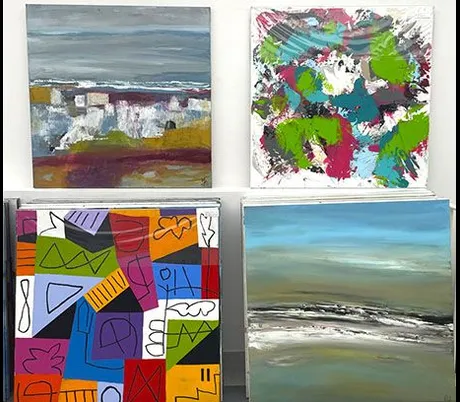
Abstract art, a new approach to art?
Abstract painting constitutes a true revolution in art because, until then, non-figurative forms were observed for their decorative or ornamental purpose. However, the aim of abstract art is to directly propose a non-figurative image. Abstract painting seems from this moment to carry a paradox: how can an image whose function is the representation of reality be an abstract representation of painting?
By opposing it to Figurative Art, Michel Seuphor (1901-1999) abstract painter, art critic and writer considers that abstract painting includes "all art that contains no reminder, no evocation of observed reality, whether this reality is, or is not, the starting point of the abstract artist."
Abstract art, as a visual language, advocates independence of form from color. Abstract painting can be said to be modern due to its innovation.
Its innovation also comes from the variety of techniques present in the paintings. Collage appears to bring new materials to the canvas, and acrylic paint develops, allowing artists to create more movement with the paint material itself. We have examples of palette knife painting, layering techniques, scraping, or dripping.
The pioneers of abstract painting
Kandinsky, often considered one of the pioneers of abstract art, began exploring non-figurative compositions around 1910, particularly when he painted Untitled (watercolor) in 1910 and wrote "abstract watercolor" on the back. He is considered the first to break free from the figurative representations in his paintings and was followed by many thereafter. 20th-century abstract painters would then develop their own movements and ways of representing "the abstract."
During the 20th century, we find:
- Cubism, founded by Pablo Picasso and George Braque in the 1910s, which consists of representing subjects in all their forms and thus breaking them down by simultaneously presenting multiple perspectives.
- Futurism, conceived by the Italians Umberto Boccioni and Giacomo Balla also in the 1910s. Their work is based on the representation of speed and movement through fragmented forms.
- De Stijl, a movement that, originating in the Netherlands with Piet Mondrian and Theo van Doesburg, advocates total abstraction and universality through the use of geometric forms and primary colors.
Several movements developed following the new reflections brought by abstract art, such as Fauvism, which sought to emphasize color rather than drawing, as well as Orphism, developed by Sonia and Robert Delaunay, 20th-century painters.
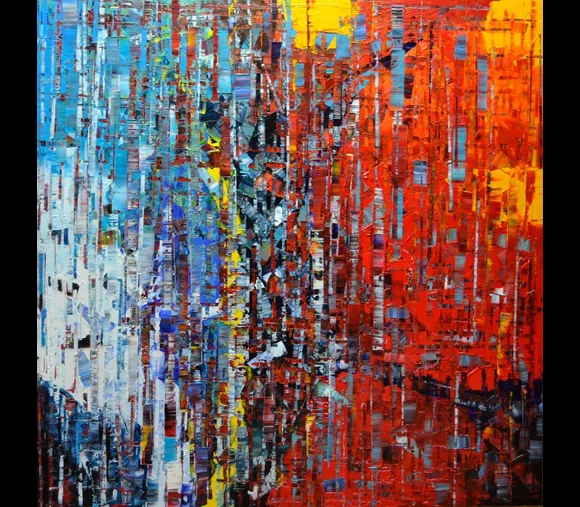
Russia also made a significant contribution to abstract art with movements such as Suprematism and Constructivism. In 1915, Kazemir Malevich painted Quadrangle, better known as Black Square on a White Background. With this work, the painter born in Ukraine (1878-1935) broke free, through abstract painting, from all the codes and references that painting had carried until then. The abstract painting is not meaningful; however, everyone is free to subjectively assign one to it. The work no longer lives by its meaning but by its sole condition as a work. Later, in 1918, Malevich created White Square on a White Background and founded Suprematism; an artistic movement whose research aimed to represent only the essential. To do this, three shapes were favored: the circle, the cross, and the square. The colors themselves are primary and meet specific requirements: white for the background, black for the square, and red for the other shapes. Finally, the space of the work offered Suprematists a means to seek a fourth dimension through the superposition of layers of paint.
The Legacy of Abstract Art
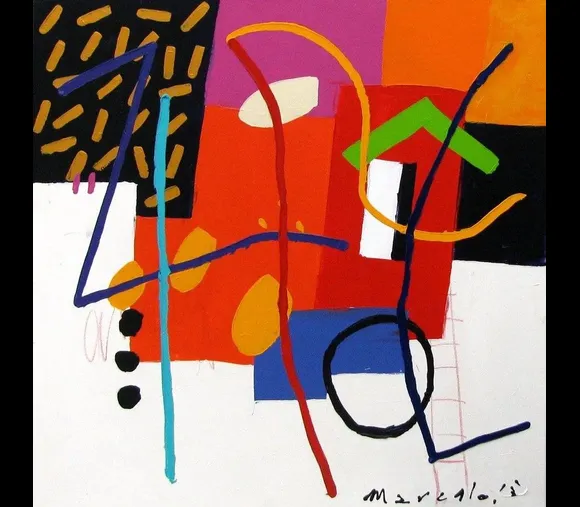
Abstraction has profoundly influenced modern and contemporary art, paving the way for endless explorations of forms and ideas. It has allowed artists to break free from the constraints of representation and focus on pure expression and experimentation. Even today, many artists continue to push the boundaries (if any exist) of abstract art. Some are even interested in abstract art within sculpture, such as British artist Eddie Peake or plastic artist Anish Kapoor. Abstract art is therefore an artistic movement that has been continuously growing and innovating since the beginning of the 20th century.
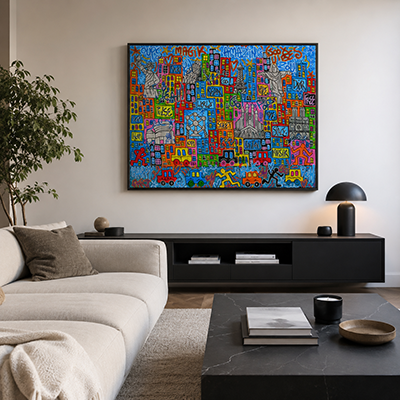
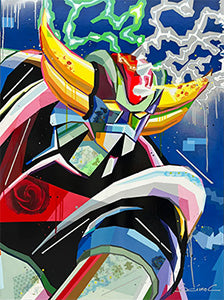
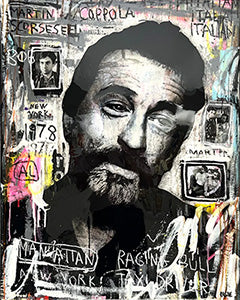
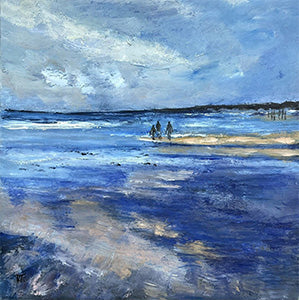
Come and discover our abstract canvases and paintings; a wide selection of modern and abstract artworks are available in our art gallery.
Here is our selection of modern abstract paintings:
Learn more